
What to Pack for a Pickleball Trip: The Complete Checklist
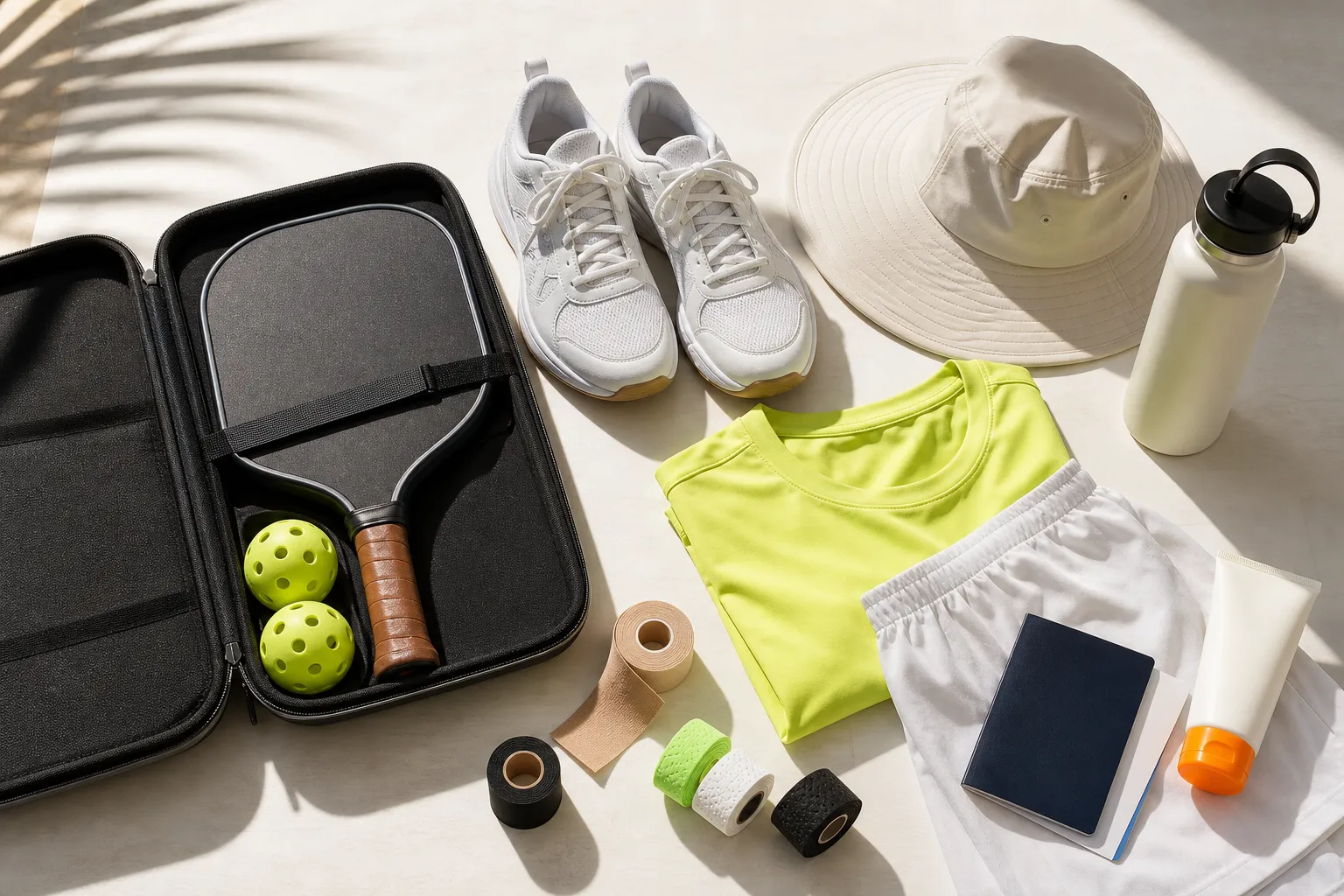
Pickleball essentials (don't leave home without these)
- Your own paddle, in a hard case. Paddle face damage in transit is the most common avoidable problem. A hard case prevents it.
- Backup paddle (if you have one). Paddles do break. Long trips with daily play wear them out faster than club play.
- Court shoes. Proper court shoes with lateral support, not running shoes. Running shoes are the leading cause of pickleball ankle rolls.
- Multiple grip replacements. Tropical destinations and humid playing climates wear grips faster than home club play. 3 to 4 spares for a week.
- Sweatbands and wristbands. Useful in tropical climates. Cheap insurance against grip slippage.
Playing kit
- 5 or more synthetic playing kit sets. Cotton stays wet. Synthetic or merino wicks fast. You'll likely play twice a day on retreats and need fresh kit each session.
- Athletic socks (synthetic or wool). Cotton socks cause blisters when wet.
- Compression sleeves. Optional but useful for elbow or knee support, especially over multiple consecutive playing days.
- Light jacket or pullover. Air-conditioned indoor courts and cool-evening play sessions both happen.
Sun protection
Outdoor pickleball travel almost always means more direct sun exposure than home play. Skimping here ruins trips.
- Wide-brim hat or visor. Caps don't protect ears or neck. A proper sun hat does.
- UV-rated sun shirt. Long-sleeve UPF 50 shirts. The most underrated piece of pickleball travel kit.
- Reef-safe sunscreen, SPF 50. Reef-safe matters in Mexico and tropical destinations.
- Polarised sunglasses. Reduces glare on outdoor courts and improves ball tracking.
- Lip balm with SPF. Easy to forget, painful to learn the hard way.
Health and recovery
- Reusable water bottle. Most properties have refill stations.
- KT tape or athletic tape. Cheap insurance for the elbow, ankle or knee tweak that always happens on day three.
- Soft elbow brace. Tennis elbow is the most common pickleball-travel complaint.
- Ibuprofen or acetaminophen. Bring some. International pharmacies vary.
- Electrolyte tablets or powder. Hydration in tropical climates is no joke.
- Foam roller (compact travel version). Game-changer for week-long retreats.
Travel essentials
- Travel insurance documents. Particularly for retreats with non-refundable deposits.
- Universal power adapter. Essential for international travel.
- Photo of your paddle and paddle case. For insurance claims if anything's damaged or lost in transit.
- Quick-dry towel. Microfibre travel towels save space and dry fast.
- Laundry detergent strips. Essential for retreats. Allows mid-trip kit washing.
What you can leave at home
- Pickleball balls. Always provided on court.
- A net. Properties have them.
- Heavy paddle bags. A simple sleeve plus the hard case is enough.
- Multiple paddles unless you genuinely use them. One primary plus one backup is plenty.
- Tennis-style ball hopper. Mostly redundant on retreat trips with provided balls.
Flying with your paddle
Pickleball paddles are allowed in carry-on and checked baggage on every major international airline. Carry-on is strongly preferred to prevent damage. A hard case fits comfortably in most overhead bins or under-seat storage. Read our complete guide to flying with your paddle for airline-by-airline rules.
Frequently asked questions
What do I need to pack for a pickleball trip?
The essentials: your own paddle in a hard case, court shoes (not running shoes), 5+ synthetic playing kit sets, wide-brim hat and UV shirt, water bottle, sunscreen, KT tape or ankle support, and grip replacements. Most properties provide balls, nets and on-court equipment, so you don't need to bring those.
Do I need to bring my own paddle?
Yes. Most properties offer loaner paddles but quality varies wildly. Playing on a paddle that matches your home setup means coaching feedback transfers and your game stays consistent. Always bring your own, in a hard case for travel protection.
What kind of shoes should I pack?
Court shoes with lateral support. Tennis shoes work well, dedicated pickleball shoes are ideal. Running shoes cause the most pickleball travel injuries because they don't support the side-to-side movement the sport requires.
Do I need to bring pickleball balls?
No. Every property and retreat provides balls. Bringing your own is unnecessary weight and not worth the bag space.
How many sets of playing clothes should I pack?
Five or more synthetic kit sets for a week-long retreat. Most retreats include two playing sessions per day, and you'll want fresh, dry kit between them. Cotton stays wet and causes chafing.
Can I take a pickleball paddle on a plane?
Yes, on every major airline. Carry-on is preferred to prevent damage. A hard case fits in standard overhead bins. Both carry-on and checked options are allowed under TSA and international aviation rules.
Related guides
Continue exploring the complete pickleball travel library.
- Pickleball Holidays: The hub guide. Retreats, resorts and rentals compared.
- Pickleball Retreats Guide: All retreat formats explained.
- Coaching Holidays: Coach-led trips for skill development.
- Resorts with Courts: Hotels with on-site courts.
- Vacation Rentals with Courts: Private villas with their own court.
- Best Destinations: Top 12 places to travel.
Heading
Lorem ipsum dolor sit amet, consectetur adipiscing elit. Suspendisse varius enim in eros elementum tristique. Duis cursus, mi quis viverra ornare, eros dolor interdum nulla, ut commodo diam libero vitae erat. Aenean faucibus nibh et justo cursus id rutrum lorem imperdiet. Nunc ut sem vitae risus tristique posuere.
Popular Articles
Get the Weekly Roundup
New retreat guides, destination tips and player stories delivered to your inbox every week. No spam, ever.
Premium Sponsor
Feature your retreat to high-intent travellers
Reserve this premium homepage placement for seasonal promotions, launches, or limited-date programs.
Partner Spot
Promote a resort or hotel offer
Ideal for room specials, tournament weeks, coaching packages or shoulder-season campaigns targeting active players.
Partner Spot
Showcase a private rental or villa
Perfect for exclusive group stays, new villa launches or owner promotions reaching a targeted pickleball audience.
Brand Sponsor
Open slot for brand sponsorship
Flexible placement for equipment brands, destination marketing campaigns, events or pickleball lifestyle partners.
Related Blogs
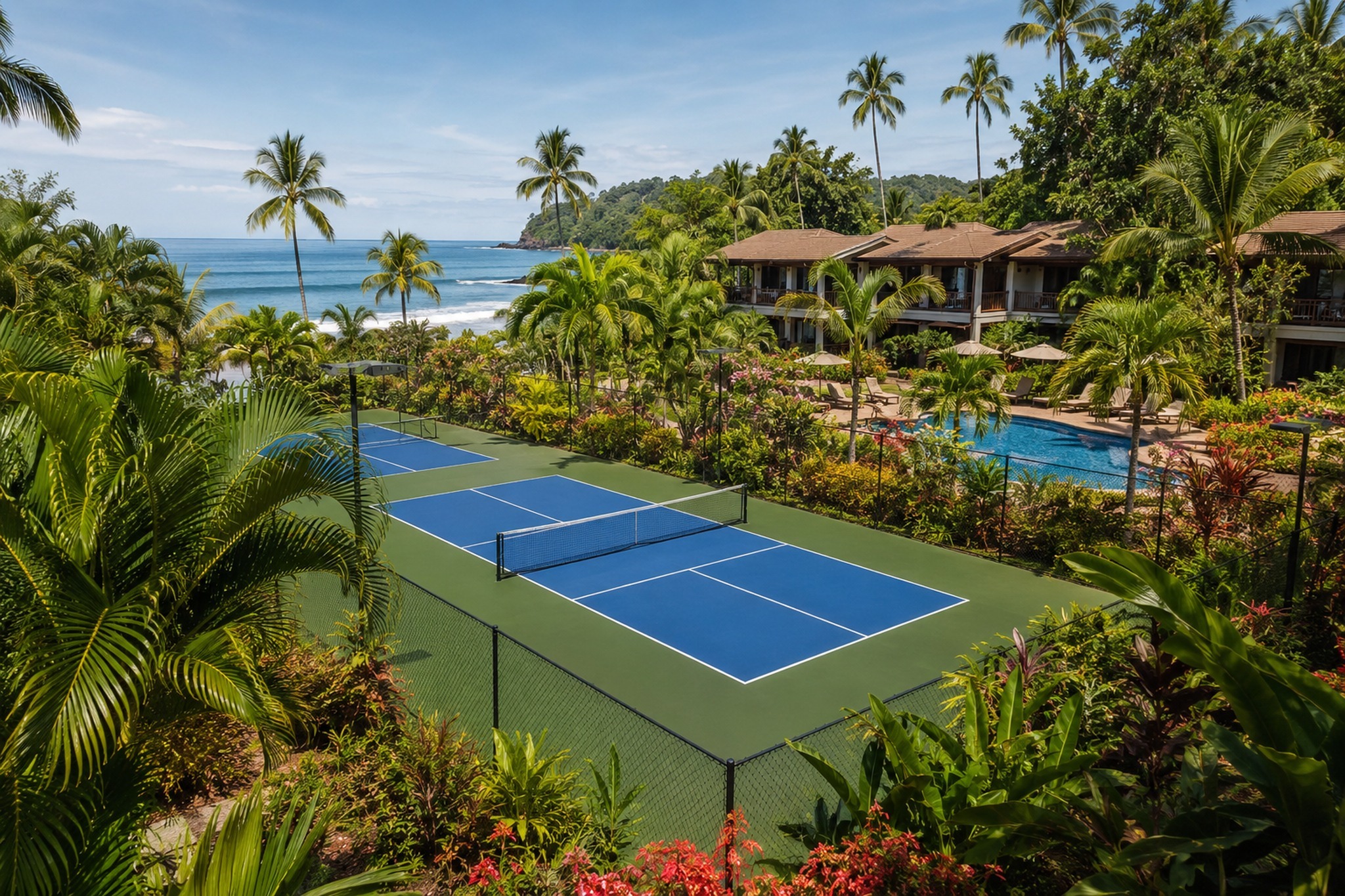
Aurora Anguilla Pickleball: What to Know Before You Visit
Aurora Anguilla is one of the Caribbean's flagship luxury resorts and a destination that has invested significantly in pickleball infrastructure as part of its broader sports and wellness offering. This guide covers what to expect from pickleball at Aurora, how to plan a trip and how it compares with other ultra-luxury Caribbean options.
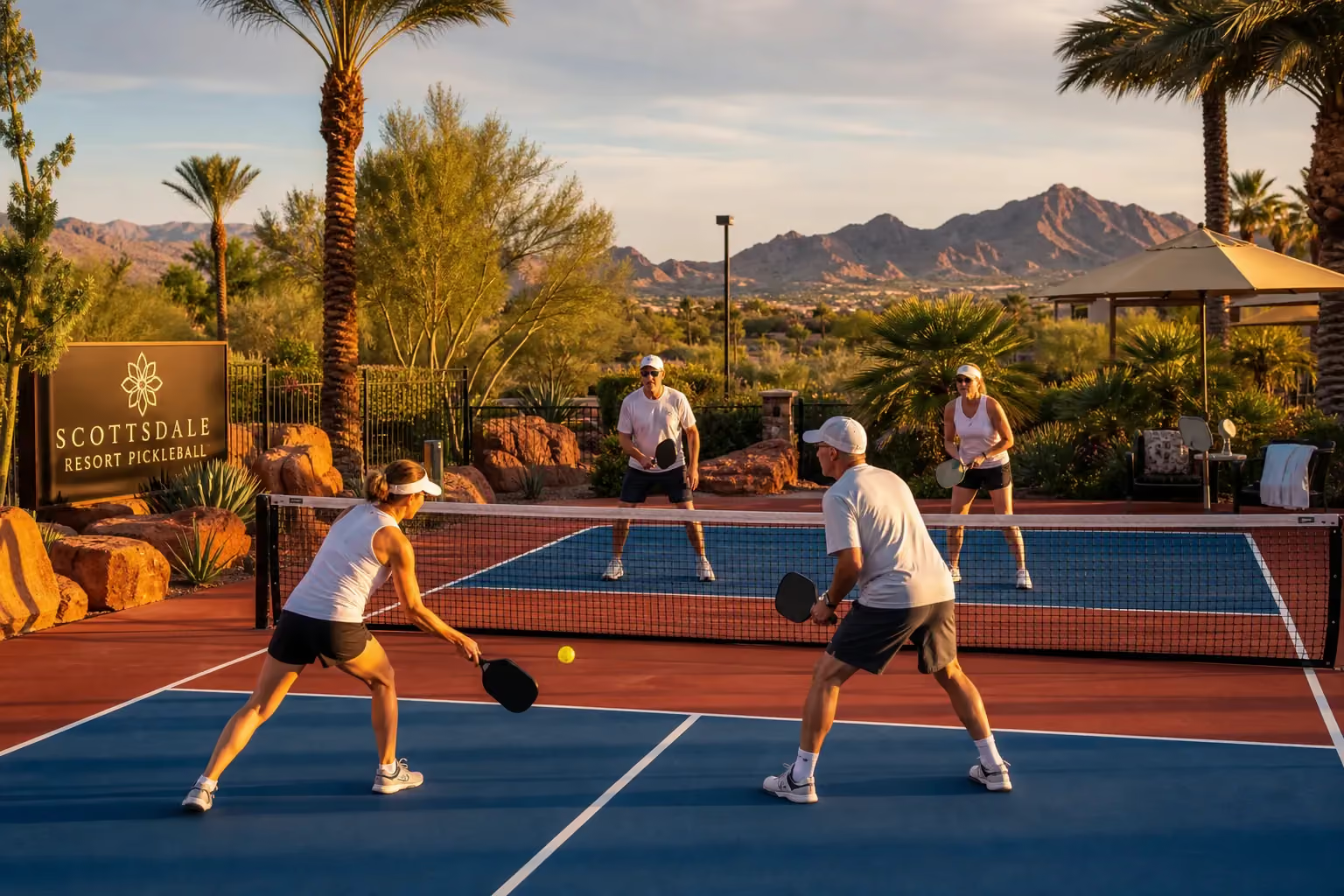
Best Time to Visit Scottsdale for Pickleball
Scottsdale plays year-round, but the right time to visit depends on your priorities. This guide breaks down the desert season-by-season for pickleball travellers, with a month-by-month verdict on weather, prices and court availability.
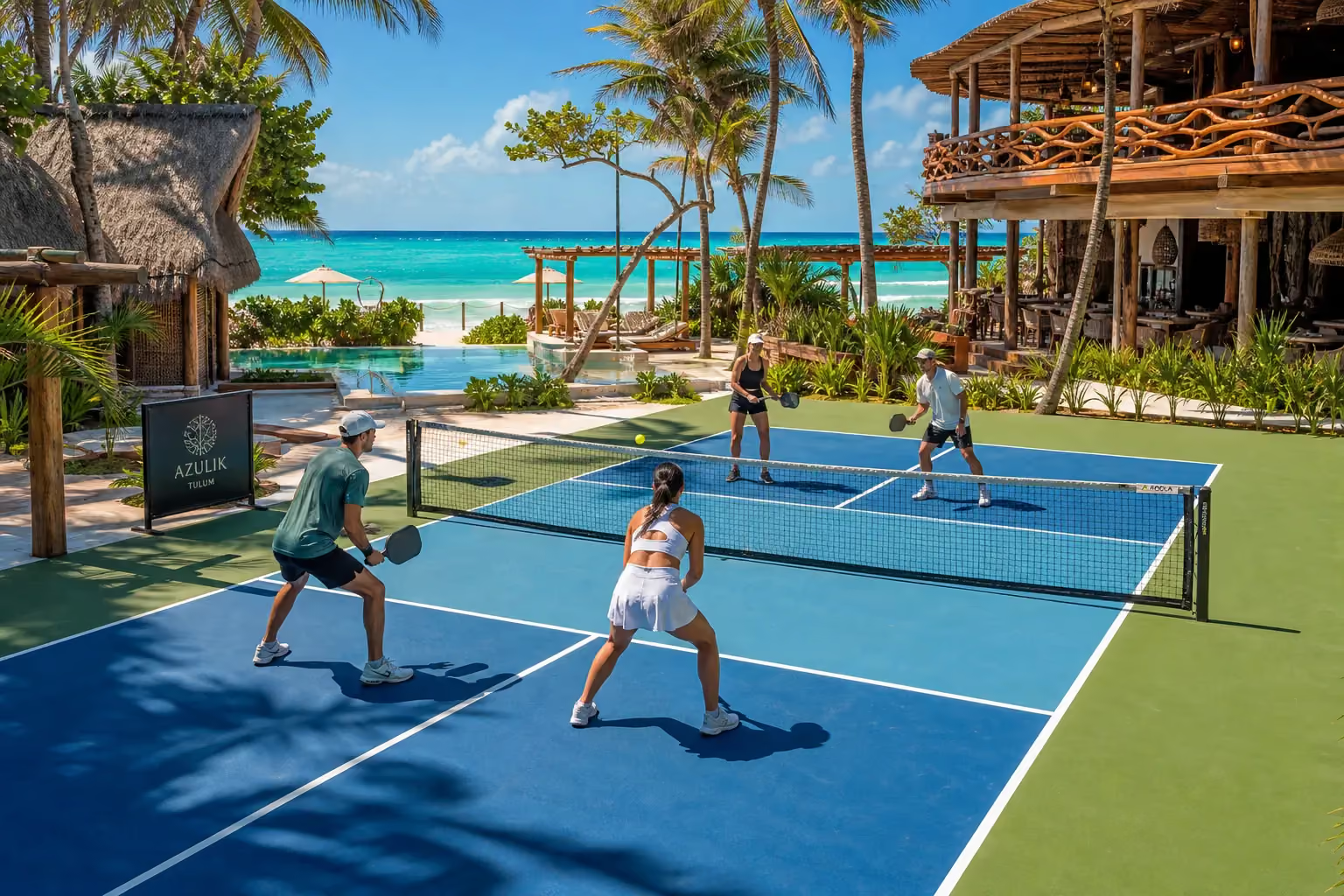
Cancún vs Tulum for Pickleball: Which Riviera Maya Destination Wins?
Both are excellent pickleball destinations on Mexico's Riviera Maya, but they suit different travellers. This guide compares them across the factors that actually matter: court access, accommodation, vibe, value and fit by traveller type.